Why You’re So Tired When You’re Healing (And What Your Body Is Actually Doing)

A heaviness that lives in the bones before the eyes even open. It follows through a day already survived, waits at the end of it, and doesn’t fully lift even after a full night’s sleep. I’ve watched this pattern repeat, both in my own healing process and in the people I’ve walked beside through theirs. Showing up for healing consistently and still feeling spent at a cellular level usually points to something specific: the body doing genuinely deep, demanding work, not a sign that anything has gone wrong.
The Work Nobody Tells You the Body Is Doing
Something happens when deep healing begins that the mind rarely prepares for. The person lying in a healing session with eyes closed, or sitting quietly in meditation, or resting on the sofa on an afternoon that felt like too much, is not simply resting. The body, at those moments, is doing some of the most demanding work of its life: processing everything the system stored before it had the capacity to metabolise it, reorganising patterns set in place years ago, slowly rewiring a nervous system shaped by everything you’ve lived through.
The body holds the residue of every experience it couldn’t fully process, stored at a cellular level, and when healing begins to reach it, the system has to do the equivalent of an internal renovation rather than ordinary maintenance. Cortisol levels shift. The nervous system works toward a new calibration. The lymphatic system begins moving what has been released through the field. The entire system is reorganising around new instructions, and that reorganisation is metabolically expensive. The body communicates the expense honestly, through tiredness.
What Is Actually Being Moved
When energy blockages begin to release, the material held within them doesn’t simply vanish. It moves through the system, the way a river that’s been partially dammed for years starts to find its natural course again once the dam shifts, carrying everything that had settled in the stilled places along with it. The system has to metabolise what’s been released, process it, complete it, carry it through and out, and that asks a great deal from the body.
Many people notice a distinct crash in the day or two following a single session, and that post-session tiredness has its own rhythm and meaning. What’s different here is the sustained, weeks-long, sometimes months-long, bone-level fatigue that arrives during a genuine and extended phase of healing work, when layer after layer is being addressed and the drain becomes ongoing.
The Body Is Also Rewiring
The habits and patterns that shaped how you responded to life, how you related to yourself, how you held fear and expressed anger, weren’t only emotional tendencies. They were inscribed in the nervous system itself, lived out as reflex. As healing reaches deep enough to shift those patterns structurally, the nervous system does the equivalent of rewiring: new pathways built, old pathways gently decommissioned. Running something that complex carries a real cost.
What the Tiredness Is Asking
Healing fatigue carries its own intelligence, and learning to listen to it rather than push against it changes how you move through a deep healing phase. A tiredness that lifts after a good night’s sleep is the body simply needing physical restoration. A tiredness that stays even after sleep, that draws you toward solitude and an inner world rather than an outer one, is often the healing process itself communicating that this phase is intensive and needs you to stay close to yourself.
The invitation is to resist the reflex of pushing through. Healing is not a race. The layers ready to shift will shift when the system has what it needs, and moving with the process rather than against it is how the deepest work gets done.
How to Support Yourself Through This Phase
Sleep as much as your body genuinely asks for, plainly: ten hours if that’s what’s needed, an afternoon rest if that’s what’s needed. Much of the deeper energetic processing is most active during sleep. Ease the external load where you honestly can, letting obligations wait and decisions sit when they don’t need answering this week, since the energy spent managing the surface of life draws from the same pool the body needs for its internal work.
Something worth noticing, both in walking through my own process and in sitting alongside others moving through theirs: the body often signals what it needs through the particular texture of the tiredness itself. Gentle movement, slow walking, easy stretching, and time near water all support the lymphatic system and the vagus nerve in carrying through what has been released. Creating real pockets of interior quiet, even five unhurried minutes without agenda, does something an hour of distracted rest never quite manages.
If you’ve also noticed a heightened sensitivity alongside the tiredness, both experiences are the surface expression of the same underlying shift, the system opening and recalibrating in ways it hasn’t been available before.
The Tiredness Has a Season
The level of fatigue you’re carrying in a deep healing phase is not your new permanent state. It belongs to a specific chapter, and most people who have moved through one know the feeling of its ending: a morning when something in the chest is lighter, a gradual return of appetite for things you’d lost interest in, an ease that arrives without announcement. The lift, when it comes, is quiet, but it is real. Please be very gentle with yourself until then. What you’re doing in the middle of this tiredness, whether or not it looks like very much from the outside, is your healing.
If you want to recognise where you are in the process, there are real signals the system gives as the intensive phase begins to complete, which can help you stay oriented rather than lost in the middle of it.
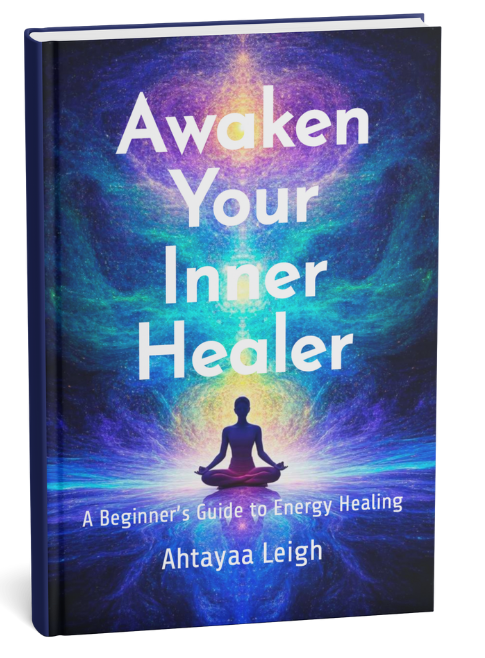
And if you want a grounded place to start understanding your own energy field as it moves through a phase like this, the Awaken Your Inner Healer guide is a warm place to begin, or to return to whenever the journey asks more of you than you expected.

Ahtayaa Leigh
Energy Healer & Wisdom Holder
Master Energy Healer, Vibrational Sound Healer, and Esoteric Wisdom Teacher, Ahtayaa founded the IICT-accredited Academy of Energy Healing in 2015, now a premier authority in energy healing certification and transformational energy body activations.
She is the creator of the Golden Ray Initiations, a groundbreaking vibrational healing system expanding the traditional 7-chakra system into the full Rainbow Body energy architecture, guiding you from limitation to wholeness through sacred geometry, light, sound, and profound guided activation.
Her mission is to awaken the full potential of the human soul, individually and collectively, helping thousands around the world experience lasting transformation and a renewed sense of purpose.

Discover Your Soul Mission Archetype
Which Soul Mission Archetype is guiding your path of awakening?
Take the 2-minute quiz to uncover yours and begin understanding your soul’s unique blueprint.