How to Know When a Client Needs More Help Than You Can Give

A certain feeling rises in the middle of a healing session, quietly at first, easy to push aside. Your client is talking, or crying, or lying still on the table, and something in you registers: this goes deeper than what I can reach. The question that follows is uncomfortable if you haven’t made peace with it yet, somewhere between whether you’re the right person to help and whether what they need is something you can genuinely offer.
I want to speak to that feeling with care, because almost every energy healer I know has felt it at some point, and almost all of them felt guilty for feeling it. The guilt is understandable. You care about this person. You want to help. And there’s a fear that acknowledging your limits somehow makes you less capable, less compassionate, less worthy of the work. Please hear me on this: the opposite is true. The healer who can recognize when a client needs more than energy work alone is a healer of real integrity. That recognition is a skill, and it deserves to be understood.
Why This Question Arises in the First Place
Energy healing is a profoundly powerful modality. It can reach layers of experience that talking therapies cannot always access. It works with the root of patterns, not just their surface expression. And yet it exists within an ecosystem of healing, not above it. When we start to see our practice as one channel within a much wider river of support, rather than the entire river itself, something shifts. We stop feeling responsible for fixing everything, and we start trusting the intelligence of what’s unfolding.
Clients come to us carrying layered histories. Sometimes what presents as an energy imbalance is also a mental health crisis, an active trauma response, or something that requires medical attention. This doesn’t mean your work is irrelevant. It means the person in front of you deserves a full constellation of care, and your awareness of that is part of what makes you a skilled practitioner. Trauma-informed healing teaches us precisely this: that our role is to support safety and empowerment, never to override or replace the full range of support a client may need.
What Your Intuition Is Actually Telling You
That quiet internal signal, the one that says something is beyond what you can offer, is worth trusting. In my experience, the role of intuition in a healing session extends far beyond reading energy in the moment. It also includes reading the situation clearly enough to know when the most loving act you can take is to point someone toward something different.
Your intuition isn’t telling you that you’ve failed. It’s telling you that you’re paying attention. It’s registering the difference between a session that’s intense and a session that’s edging into territory where professional mental health support, medical care, or crisis intervention would serve this person better. Learning to distinguish between those two things is part of the ongoing education of any serious healer.
Signs That a Client May Need Additional Support
There’s no rigid checklist here, because every client is different and every session is its own living thing. But there are patterns I’ve noticed over the years, and they’re worth naming.
When a client’s distress intensifies dramatically over multiple sessions rather than gradually easing, that’s worth paying attention to. When their narrative includes experiences of self-harm, suicidal ideation, or harm toward others, you’re in territory that requires trained mental health support, full stop. When someone discloses ongoing abuse, current domestic violence, or an acute mental health episode, energy healing has a role in their broader journey, but it’s a supporting role, not the lead.
When a client becomes increasingly dependent on you between sessions, texting frequently, seeking reassurance at all hours, or framing you as the only person who truly helps them, that’s a signal too. Not of how powerful your work is, but of how much this person needs a wider web of support. Healthy boundaries in your practice aren’t just protective for you. They’re a form of care for the client. Over-dependence isn’t healing. It’s a pattern that needs gently, lovingly redirecting, and it’s closely related to what to do when a client triggers something in you, since both ask you to stay clear about where your responsibility ends.
You might also notice when something in the body warrants medical investigation. If a client describes persistent physical symptoms that haven’t been assessed by a doctor, referring them to their GP alongside continued healing work is responsible, not defeatist. Energy healing works beautifully alongside conventional medicine. Encouraging that combination is part of holding the whole person in view.
How to Have the Conversation
This is the part that most healers dread, and I understand why. You’re worried your client will feel rejected. You’re worried they’ll think you’ve given up on them. You’re worried about how to find the words.
The key is to frame the referral as an expansion, not a withdrawal. You’re not stepping back. You’re making sure this person has everything they need. A conversation might sound something like this: “I want to be fully honest with you because I care about your wellbeing. What you’re carrying is significant, and I want to make sure you have the full support you deserve. I’d love to continue working with you, and I also want to suggest you connect with a counsellor or therapist who can sit with you in a different way. Energy healing can work beautifully alongside that kind of support, and together I think you’d feel the difference.”
That’s it. Warm, clear, without apology. You can hold the space with tenderness while also being honest about what the space can and can’t hold. Holding space well has always included knowing its edges.
It’s worth having a small list of local and online resources you trust, therapists, counsellors, crisis lines, trauma specialists, so that when this conversation arises you’re not sending someone away empty-handed. You’re giving them a next step. That’s a gift, not a rejection.
What This Reveals About Your Practice
The healers who struggle most with this question are often the ones who carry an unconscious belief that they should be enough for everyone who comes to them. I’ve sat with that belief myself. It has roots in the wounded healer archetype, in the part of us that learned our worth through being needed. When someone needs more than we can give, that old wound whispers that we’ve failed.
The antidote isn’t to push harder or stretch your practice beyond its natural bounds. The antidote is to understand that genuine service sometimes looks like pointing to the door rather than trying to fit everything through yours. A healer who knows their scope isn’t a limited healer. They’re a mature one.
This clarity also protects you. Energetically closing your sessions matters, and so does energetically closing your sense of responsibility. You can care deeply about a client’s outcome without taking ownership of their entire healing journey. They have their own soul, their own path, and their own constellation of support that extends beyond you. Trust that.
A Final Word on Integrity
What you’re really navigating when this question comes up is the difference between fear and wisdom. Fear says: if I refer this person on, I’ve failed them. Wisdom says: the most loving thing I can do right now is make sure they have everything they need, even if that means handing them a map to a different door.
Your practice is a sacred space. Keeping it clear, honest, and appropriately bounded is part of what makes it sacred. The healer who can say “this is what I can offer, and this is where someone else is better placed to serve you” is a healer who has done their own work, who knows where they end and where another’s journey begins.
That’s the kind of practitioner that clients remember. And the kind that stays well enough to keep going.
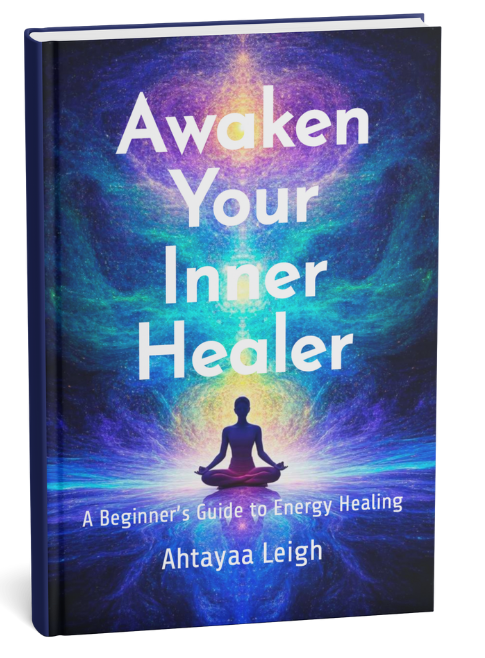
If you’re still finding your footing as an energy healer and want a clear and grounded place to deepen your understanding of the work, the Awaken Your Inner Healer guide is a loving place to begin. And if you’re ready to train with the full depth and structure that professional practice deserves, the Energy Healing Certification will meet you there.

Ahtayaa Leigh
Energy Healer & Wisdom Holder
Master Energy Healer, Vibrational Sound Healer, and Esoteric Wisdom Teacher, Ahtayaa founded the IICT-accredited Academy of Energy Healing in 2015, now a premier authority in energy healing certification and transformational energy body activations.
She is the creator of the Golden Ray Initiations, a groundbreaking vibrational healing system expanding the traditional 7-chakra system into the full Rainbow Body energy architecture, guiding you from limitation to wholeness through sacred geometry, light, sound, and profound guided activation.
Her mission is to awaken the full potential of the human soul, individually and collectively, helping thousands around the world experience lasting transformation and a renewed sense of purpose.

Discover Your Soul Mission Archetype
Which Soul Mission Archetype is guiding your path of awakening?
Take the 2-minute quiz to uncover yours and begin understanding your soul’s unique blueprint.