How to Set Boundaries with Clients as an Energy Healer

A message arrives at 11:42pm, something urgent and tender from a client who needs to talk right now, and the body answers before the mind gets a vote. Phone already in hand, thumbs already moving toward a reply, even though morning would have done just as well. That reflex is familiar to nearly everyone doing this work sooner or later, and underneath it sits a belief worth examining: the quiet assumption that a good healer is always available, and that any boundary placed around your time or your energy is somehow a small betrayal of the people you’re here to serve.
The Invisible Belief That Makes Boundaries Feel Like Betrayal
That belief rarely announces itself directly. It shows up instead as guilt when a message goes unanswered for a few hours, or as a felt obligation to over-explain a fee, a cancellation policy, or a session length.
It tends to trace back to an idea absorbed long before this work began, that love and availability are the same thing, and that real care has no edges. Healing work, more than most professions, can quietly reinforce that idea, since the work itself is about presence, attunement, and holding space for another person’s pain.
What a Boundary Actually Is in a Healing Practice
A boundary in this context is not a wall and not a withdrawal of care. It is simply a clear, honest statement of where your availability, energy, and time begin and end, communicated in a way that leaves the relationship intact. A boundary might sound like naming your actual session hours, holding a cancellation policy consistently, or declining to offer free extended support between paid sessions. The care in the room during an actual session stays fully intact. A healer who has rested and refilled their own reserves brings a steadier, more present field to the people they work with than one running on depletion.
Where the Pull Toward Boundarylessness Comes From
Many of the most gifted healers I’ve known, myself included, came to this work through their own wounding, and that origin gives the work its depth and its compassion. It can also leave an old pattern intact: an internal sense that your own needs matter less than someone else’s pain, carried over from earlier years when meeting other people’s needs felt like the safest route to belonging or worth. Recognizing that pattern doesn’t require unpacking its entire history in this moment. Noticing it as it shows up, in the urge to respond instantly, in the discomfort of holding a fee, in the guilt that surfaces when you simply rest, is usually enough to begin loosening its grip.
What Boundaries Look Like in Practice
In day-to-day terms, a sustainable practice tends to include consistent session hours that you hold even when a client pushes against them gently, a cancellation policy stated plainly and applied evenly, and a clear sense of what falls inside a session versus what would require booking additional time. Empaths and highly sensitive healers tend to need these structures even more than most, since the absence of a clear edge makes it easy to keep absorbing a client’s distress well past the end of an official session. Holding space without absorbing what a client is carrying becomes considerably easier once the practical boundaries around your time are already in place.
How to Communicate a Boundary Without Coldness
A boundary lands well when it’s stated plainly, kindly, and without an apology buried inside it. Something like, “I’m not available for sessions after 6pm, but I’d love to find a time tomorrow that works,” carries warmth and clarity at the same time. Trauma-informed practice actually depends on this kind of consistency, since a client’s nervous system settles into trust through a practitioner who is reliable and predictable, not one who bends every time. A client whose own boundaries have historically gone unrespected may, understandably, test yours at first. Holding steady, warmly and without retaliation, often becomes one of the more healing parts of the entire relationship. Wounded healers in particular tend to find this the hardest skill to build, and one of the most worthwhile.
The Most Boundaried Healers Are the Most Effective Ones
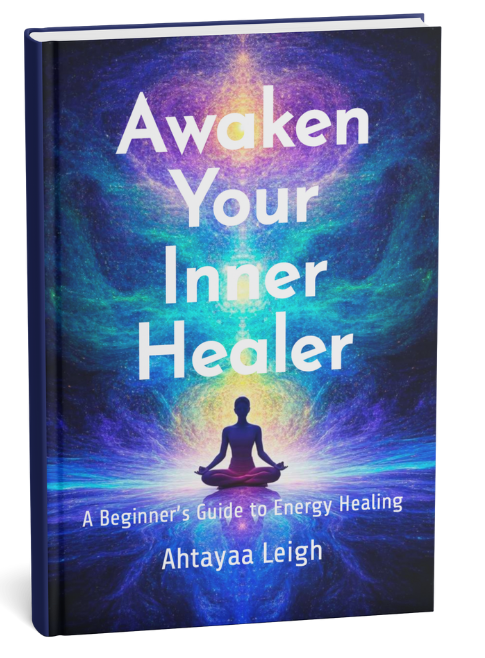
This isn’t about carrying full responsibility for a client’s outcome, since that belief is precisely what erodes the boundaries this piece is describing. I’ve worked with hundreds of healers over the years, and without exception, the ones who sustain their practices with the most joy and the least burnout are the ones who have done the internal work of becoming genuinely comfortable with professional limits. Their clients consistently report feeling just as held, often more so, because the healer in front of them is rested, present, and working from genuine choice rather than quiet obligation. If a free resource on building this kind of sustainable practice would help, the Awaken Your Inner Healer guide is a good place to start.

Ahtayaa Leigh
Energy Healer & Wisdom Holder
Master Energy Healer, Vibrational Sound Healer, and Esoteric Wisdom Teacher, Ahtayaa founded the IICT-accredited Academy of Energy Healing in 2015, now a premier authority in energy healing certification and transformational energy body activations.
She is the creator of the Golden Ray Initiations, a groundbreaking vibrational healing system expanding the traditional 7-chakra system into the full Rainbow Body energy architecture, guiding you from limitation to wholeness through sacred geometry, light, sound, and profound guided activation.
Her mission is to awaken the full potential of the human soul, individually and collectively, helping thousands around the world experience lasting transformation and a renewed sense of purpose.

Discover Your Soul Mission Archetype
Which Soul Mission Archetype is guiding your path of awakening?
Take the 2-minute quiz to uncover yours and begin understanding your soul’s unique blueprint.