How to Talk About What You Do as an Energy Healer

Someone at a dinner party or a family gathering asks what you do for a living, and something inside goes very still. It’s happened to nearly every healer I know, myself included, more than once in the early years. Maybe the answer comes out short and the subject changes quickly. Maybe it tips the other way, over-explaining while the listener’s eyes glaze at the word energy. Underneath the fumble sits something more interesting than a language problem.
Why the Words Get Stuck
Someone asking what you do is looking for a way to place you in a world they already recognize, and this work doesn’t fit neatly into most people’s existing map of it. The nervous system often registers that mismatch before a single word leaves the mouth, and it contracts. That contraction is worth noticing, because it usually signals an old, unresolved skepticism about the work that hasn’t yet been fully separated from its actual value.
In my own path, and in conversations with hundreds of healers over the years, the language problem nearly always turns out to be a belief problem wearing a different costume.
Knowing, in the body, that the work is real and that the people who seek it out are genuinely served by it makes explaining it simple. Staying in quiet negotiation with the mainstream world’s idea of what counts as legitimate keeps every explanation coming from a divided place, and divided energy rarely lands clearly, however carefully the sentence gets built.
What You’re Actually Doing When You Heal
Getting clear, in plain language, on what actually happens during a session is more useful than reaching for a theoretical framework or a modality name. The hands notice where the flow has gone still in someone’s field, and the work of the hour is bringing those places gently into awareness so the person’s own system can release what it has been carrying.
That’s what the energy healing process is actually doing, even on days when the language of fields and flow doesn’t land for whoever you’re speaking with. What science is saying about energy healing can offer a more concrete foothold when it doesn’t.
Knowing you’re genuinely ready to work with clients tends to make every version of this conversation easier, since the words carry more weight once that question has already been settled for yourself.
Finding the Words That Hold Up
A practice worth trying: say the answer out loud, alone in a room, and notice where it lives in the body. Does it come from the chest, with real weight behind it, or from a tightened throat, with an uptick at the end like a request for permission? Language built from the inside out doesn’t need anyone else’s belief to hold itself up.
A line like, “I work with the energy field of the body, and I help people release what their system has been holding so they can move with more ease,” is understandable to someone who has never touched the idea of energy healing. Everyone knows what it feels like to carry something they can’t put down.
Sometimes a harder question arrives: “Does it actually work?” This is where many healers collapse, because doubt spoken aloud floods back old unresolved uncertainty of their own. A steadier response sounds more like curiosity than defence: “Fair question. Results vary, and I can only speak to what I’ve personally witnessed.” The intuitive side of this work is hard to explain to someone who hasn’t lived it, and there’s no need to try. A calm presence in that moment communicates more than the sentence does.
The Ground the Words Grow From
Healers who talk about this work with ease share a particular quality, and the words they choose are almost beside the point. What carries it is the sense that they settled the question for themselves long ago, took their work off the world’s examination table, and built their confidence on what they’ve actually witnessed happen in the people they’ve served.
Empaths and highly sensitive healers can find that inner ground quietly worn down by sustained closeness to other people’s skepticism. The remedy stays the same regardless: return again and again to direct experience, the sessions that changed something nothing else had reached, as the primary source of knowing. And for the practical side of this work, once people understand what you offer, deciding what to actually charge for it is a related but separate question.
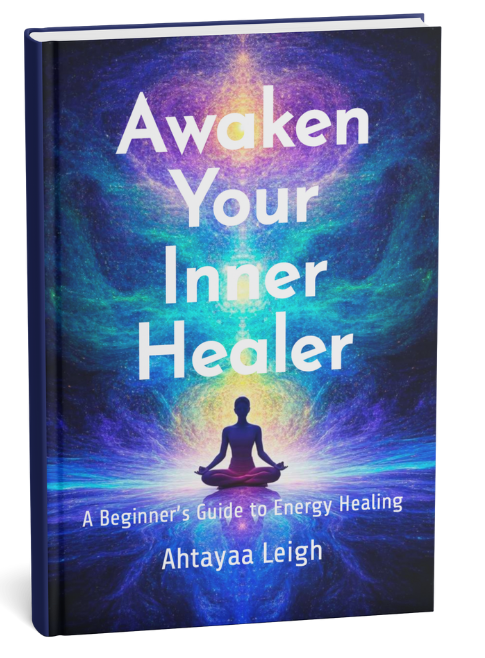
A warm, grounded place to deepen the foundation under all of this is the Awaken Your Inner Healer guide.
And when the time comes to build that foundation into a full professional qualification, with the structure that makes this language and confidence completely your own, the Energy Healing Certification is there for that next step.

Ahtayaa Leigh
Energy Healer & Wisdom Holder
Master Energy Healer, Vibrational Sound Healer, and Esoteric Wisdom Teacher, Ahtayaa founded the IICT-accredited Academy of Energy Healing in 2015, now a premier authority in energy healing certification and transformational energy body activations.
She is the creator of the Golden Ray Initiations, a groundbreaking vibrational healing system expanding the traditional 7-chakra system into the full Rainbow Body energy architecture, guiding you from limitation to wholeness through sacred geometry, light, sound, and profound guided activation.
Her mission is to awaken the full potential of the human soul, individually and collectively, helping thousands around the world experience lasting transformation and a renewed sense of purpose.

Discover Your Soul Mission Archetype
Which Soul Mission Archetype is guiding your path of awakening?
Take the 2-minute quiz to uncover yours and begin understanding your soul’s unique blueprint.