Why You Keep Self-Sabotaging Your Healing (And What Your Energy Field Is Really Doing)

You booked the session. You meant it. Something in you was genuinely ready, genuinely tired of carrying what you’ve been carrying. And then, somewhere between the intention and the follow-through, you cancelled. Or you went back to the thing you’d promised yourself you were leaving. Or you let three weeks pass without doing the practice that was actually helping, because somehow every day there was a reason, a distraction, something that mattered more. And now you’re sitting with the quiet, familiar weight of having undermined yourself again. Please take a soft breath before you turn this into evidence about who you are.
Self-sabotage on the healing path is one of the most misunderstood experiences I see, and one of the loneliest. Because the people who do this are not the careless ones. They are the ones who care deeply. The ones who know exactly what they’re doing even as they’re doing it. The ones who genuinely want to heal and then watch themselves walk in the opposite direction and can’t quite understand why. If this is you, I want you to know that this pattern carries far more wisdom in it than it does failure.
What Self-Sabotage Actually Is
The word “self-sabotage” implies deliberate destruction. As though some reckless part of you is tearing down what your wiser self has built. But that framing misses what is really happening, and it makes the pattern far harder to shift.
In my experience, working with my own layers and with those of many people I’ve accompanied over the years, what looks like self-sabotage from the outside is almost always the nervous system making a choice about safety. Your body has been shaped by everything it has lived through. The wounds, the losses, the moments when opening up or trying something new ended in pain. And it is extraordinarily good at detecting when a situation resembles those moments, even when the resemblance is one the conscious mind can’t see. Healing, real healing, changes things. It shifts your frequency. It asks you to let go of identities that have kept you anchored. And to a nervous system attuned to threat, that kind of change can feel indistinguishable from danger.
So the cancellation is protection. The return to what hurts is familiarity, and familiarity is a form of safety when safety has been rare. The inaction is the body pressing its foot gently on the brake, because something in the deeper layers of your field is signalling that it needs more time before it can fully open to this.
The Identity Layer Beneath the Pattern
There is something subtler happening beneath the nervous system response, and it’s worth sitting with honestly. When you have lived for years inside a particular story about yourself, a story shaped by your wounds, your survival strategies, the roles you learned to play in your family or your relationships, that story becomes structural. It’s not just a narrative. It’s the architecture through which you experience yourself.
Healing asks you to question that architecture. And some part of you understands, even if the conscious mind hasn’t caught up, that stepping into a healed version of yourself means stepping away from the version you’ve known. The pain is familiar. The limitations are familiar. The patterns that have cost you the most have also been the most consistent things you’ve had. And when trauma has shaped your perception for long enough, the distorted version of reality starts to feel more trustworthy than the truth. The self that has been shaped by the wound doesn’t dissolve easily, and it shouldn’t. It deserves to be released with gentleness, not ripped away with urgency.
This is why healing can feel like loss even when it’s going exactly right. When a layer of old patterning held in the energy field begins to shift and release, it doesn’t always feel like freedom on the way out. Sometimes it feels like disorientation. Like the floor moving. Like something foundational being touched. And the self that has organised itself around that pattern can pull you back, not out of malice, but out of a genuine, tender need to stay intact.
The Fear of an Unfamiliar Self
I want to name something that rarely gets spoken. The healing journey has a particular terror in it that most people are too embarrassed to admit, and it’s this: what if I heal, and I don’t recognise myself? What if I let go of the grief or the anger or the familiar weight of all of this, and the person on the other side is a stranger?
That question lives in the body, often below the level of conscious thought. And it exerts a powerful pull. Because as painful as the wound is, it is also mine. The struggle is mine. The particular shape of my suffering is, in a strange way, a form of self-definition. And the prospect of setting it down permanently, of becoming someone who no longer carries this particular thing, can feel less like relief and more like disappearing.
What looks like irrationality carries real wisdom in it. The protective intelligence of the field is doing its job. The problem is that the job has become confused. What was designed to keep you safe is now keeping you small. And that confusion plays out as the pattern you’ve been calling self-sabotage.
If you’ve ever found yourself clinging to struggle in a way that doesn’t make rational sense, this is the layer that lies beneath it. The familiar pain is a known quantity. The unfamiliar wholeness is not. And the body chooses the known, every time, until it has been shown, slowly and with great patience, that the unknown is safe to inhabit.
Why the Pattern Intensifies When You’re Getting Close
One of the most disorienting things about self-sabotage on the healing path is that it often arrives just as something real is beginning to move. You’ve had a session that reached something deep. Or a practice that cracked something open. Or a conversation with yourself that felt like genuine truth. And then, almost immediately, the pull in the opposite direction intensifies. The urgency to cancel, avoid, or revert becomes stronger than it has been in weeks.
This almost always means you were right about the healing. When the energy field is genuinely rebalancing, the old structures within it don’t simply step aside. They consolidate. They make one last bid to stay in place. This is the energetic equivalent of what happens in any system when equilibrium is threatened: the system reorganises to resist the disruption before it allows the change. Knowing this doesn’t make the pull any less real. But it changes the meaning of it. The intensification of the resistance is often the moment just before the breakthrough, and walking through it, even slowly, even imperfectly, is exactly what is being asked of you.
What to Do When You Catch Yourself Pulling Back
The most damaging thing about the pattern is rarely the pattern itself. It’s the layer of self-criticism that wraps around it. The shame of having done it again. The story that this is proof of some fundamental unfixability. That narrative is worth examining more closely than the behaviour it describes, because it adds a second wound on top of the first and makes it harder to return.
When you catch yourself pulling back, the most useful thing you can do is to meet it with genuine curiosity rather than judgement. Ask what the resistance is actually protecting. Sit with that question not as an intellectual exercise but as an invitation inward. Sometimes a clear answer surfaces. Sometimes it doesn’t. But the act of asking, of treating the resistance as worthy of understanding rather than something to be overridden, changes the relationship between you and the pattern. You stop fighting yourself. And fighting yourself has never, in my experience, produced lasting healing.
Return to the practice, the session, the commitment, as soon as you can. Not with grand declarations or fresh promises to yourself. Just quietly, without fanfare, without requiring yourself to have an explanation for the gap. The healing path is not a straight line, and it has never required perfection of anyone who has walked it. What it requires is the willingness to keep coming back.
Be particularly gentle in the days after a self-sabotage. The body is often depleted and tender in those moments, and what it needs is not more pressure but more care. Drink water. Move slowly. Spend time in whatever environment helps you feel grounded and held. The process of healing has its own rhythm, and that rhythm includes rest, includes pauses, includes the messy, non-linear passages that the tidy narratives of healing never seem to mention.
A Different Way of Seeing This
I want to offer you something before we close. The very fact that self-sabotage on the healing path distresses you as much as it does is, in itself, significant. There are many people who never notice it, who don’t feel the gap between where they are and where they want to be, who haven’t yet developed the sensitivity to see their own patterns clearly. You have developed the sensitivity to see your own patterns clearly, and that sensitivity is rare. The ache you feel when you undermine yourself is the part of you that genuinely wants something different. That ache is not a symptom of failure. It’s evidence of how real your commitment to healing is, even when your behaviour doesn’t yet match it.
The field is doing something complex and layered in those moments of resistance. Treat it as the work, not the avoidance of the work. The healing is happening even in the pulling back, because the pulling back reveals exactly what still needs to be met with gentleness. The path and the obstacle are, very often, the same thing.
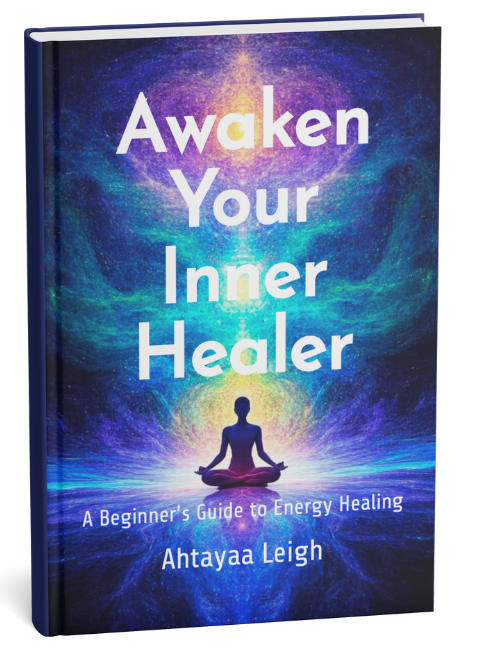
If you’d like to begin understanding your energy field more deeply and working with it in a way that is grounded, compassionate, and clear, the Awaken Your Inner Healer guide is a loving and practical place to start. It will help you understand what your energy is doing and why, and give you a foundation for working with it rather than against yourself.

Ahtayaa Leigh
Energy Healer & Wisdom Holder
Master Energy Healer, Vibrational Sound Healer, and Esoteric Wisdom Teacher, Ahtayaa founded the IICT-accredited Academy of Energy Healing in 2015, now a premier authority in energy healing certification and transformational energy body activations.
She is the creator of the Golden Ray Initiations, a groundbreaking vibrational healing system expanding the traditional 7-chakra system into the full Rainbow Body energy architecture, guiding you from limitation to wholeness through sacred geometry, light, sound, and profound guided activation.
Her mission is to awaken the full potential of the human soul, individually and collectively, helping thousands around the world experience lasting transformation and a renewed sense of purpose.

Discover Your Soul Mission Archetype
Which Soul Mission Archetype is guiding your path of awakening?
Take the 2-minute quiz to uncover yours and begin understanding your soul’s unique blueprint.